
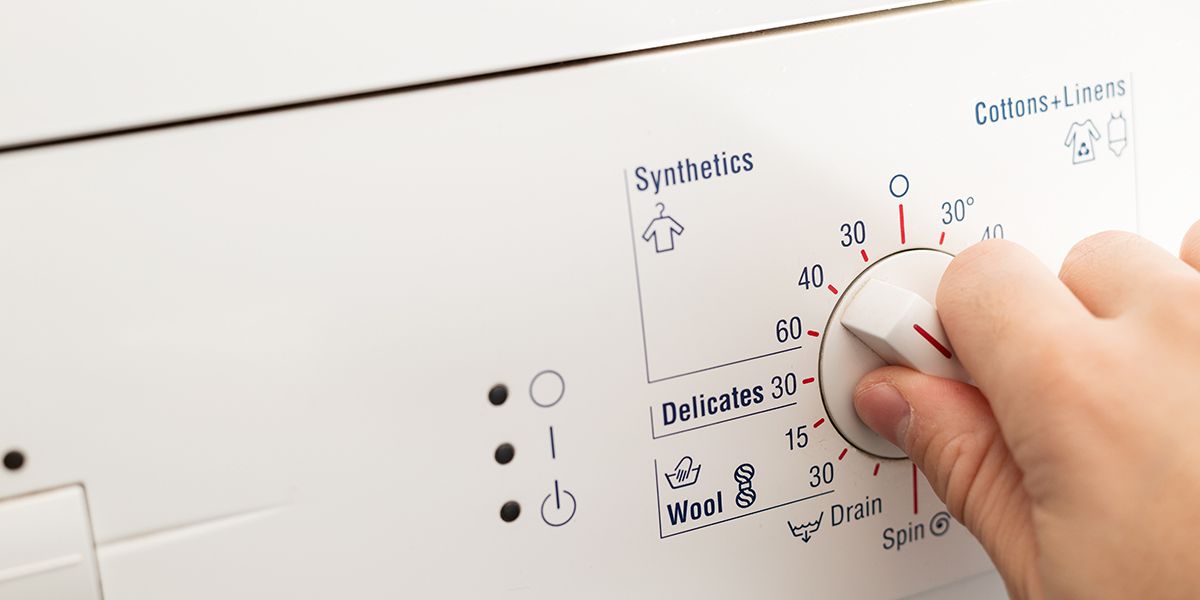
Opting for a 30 °C wash stands out as an optimal choice for various everyday fabrics, from cotton to linen, as well as wool, acrylic, and viscose. Contrary to common belief, washing at this temperature achieves similar cleanliness and hygiene levels as higher temperatures. Not only does this approach extend the lifespan of your garments and appliances, but it also benefits the environment. Here are six compelling reasons to make 30 °C your go-to laundry temperature.
1 - Un geste pour la planète : réduire sa consommation d'énergie
Washing clothes at a lower temperature, specifically 30 °C, significantly lessens energy usage, leading to notable savings. Using higher settings requires more electricity. According to the Agency for Ecological Transition (ADEME), electricity accounts for a substantial portion of final energy consumption in France. High energy consumption ties directly to increased CO2 emissions, contributing to climate change and local air quality deterioration. Choosing 30 °C also minimizes microplastic release, which often ends up in our oceans. Adopting this practice is a crucial environmental step everyone can take.
2 - Économiser sur les factures d'énergie
Washing at 30 °C instead of higher temperatures (typically 40 °C) allows for tangible savings on energy costs. A 40 °C cycle uses approximately 0.7 kWh, while a 30 °C washonly consumes 0.4 kWh. In a context where energy prices are on the rise, this simple switch leads to noticeable reductions in your monthly bills.
3 - Efficacité comparable à des températures plus élevées
There’s a common misconception that only hot washes can deeply cleanse garments. This is inaccurate! A 30 °C wash proves equally effective, with minor distinctions from a standard 40 °C cycle. Modern washing machines are equipped with innovative technologies specifically designed to ensure high cleaning efficiency at lower temperatures. Additionally, there are detergents formulated to work best at 30 °C, or even 20 °C.
4 - Conserver la durabilité des textiles
While high temperatures (like 60 °C) may be necessary for heavily soiled items or those exposed to illness, most laundry can achieve satisfactory cleaning at 30 °C. Higher temps frequently accelerate fiber wear and can dull colors. By keeping the wash temperature low, your clothes last longer while also protecting delicate fabrics, such as wool and silk, from premature damage.
5 - Réduction des risques de décoloration
An additional benefit of washing at 30 °C is a decreased likelihood of color bleeding. This temperature is generally too low to provoke chemical reactions that can lead to fabric discoloration. As a result, you can avoid the tedious task of sorting clothes, though caution is still advised for new garments during their initial wash.
6 - Assurer la longévité de votre lave-linge
One of the major concerns affecting washing machines is limescale buildup from hard water. Heating the water during washes over 30 °C exacerbates this issue, leading to significant deposits that compromise machine performance and longevity. Thus, washing at 30 °C not only maintains your clothing but also enhances the lifespan of your appliance.


